
Grant County Projected Versus Actual Release
A projected release date is a calculation based on facts known at that point. It is not an appointment at the exit door. For a New Mexico state prisoner, NMCD Offender Management Services starts with the judgment and sentence, then accounts for presentence confinement credit and earned or forfeited deductions. The actual release record is created later, when the agency completes the event. These dates can match, but they answer different questions.
A full-term date is also distinct. It reflects a sentence endpoint before all conditional reductions and administrative factors represented in the projection. A parole eligibility date only marks when consideration may become possible. It does not mean the Board will grant parole or that the person will leave prison on that day. For a Grant County Detention Center detainee awaiting trial, there may be no sentence-based projection at all. Bond, release orders, case changes, and separate holds control the timing.
Find a Grant County Release Date
Begin with the agency that controls the custody. The county’s Prisoner In Custody list can rule in a current GCDC listing, but it does not publish a verified release archive or projected-date field. NMCD’s system applies only to state prison and state probation/parole records. A local jail departure may instead be a transfer to NMCD, federal authorities, ICE, another jail, or a court-ordered placement.
- Identify whether the person is at GCDC, in NMCD custody, or held by another agency.
- For a Grant County case, obtain the judgment, release order, bond entry, and presentence-credit order from the proper court.
- For state custody, use the NMCD Offender Search and record only date fields that actually appear.
- Request the Certified Case Summary or sentence-calculation record when the public result is incomplete.
- Compare the projected date, calculation method, full-term date, parole eligibility date, and posted credits.
- Check for another case, warrant, detainer, Board action, or amended judgment that may affect departure.
- After the event, obtain the actual GCDC or NMCD release record instead of treating the old projection as proof.
NMCD warns that its central offices do not provide general live inmate-release updates. Its search directs users to the institution or supervising office for legal-status verification. An IPRA request is for existing documents, not a demand that staff predict the future. Victims and qualifying family members have a separate NMCD Victim Services channel for projected release date and location information.
The official NMCD search page states its jurisdiction and update limits.
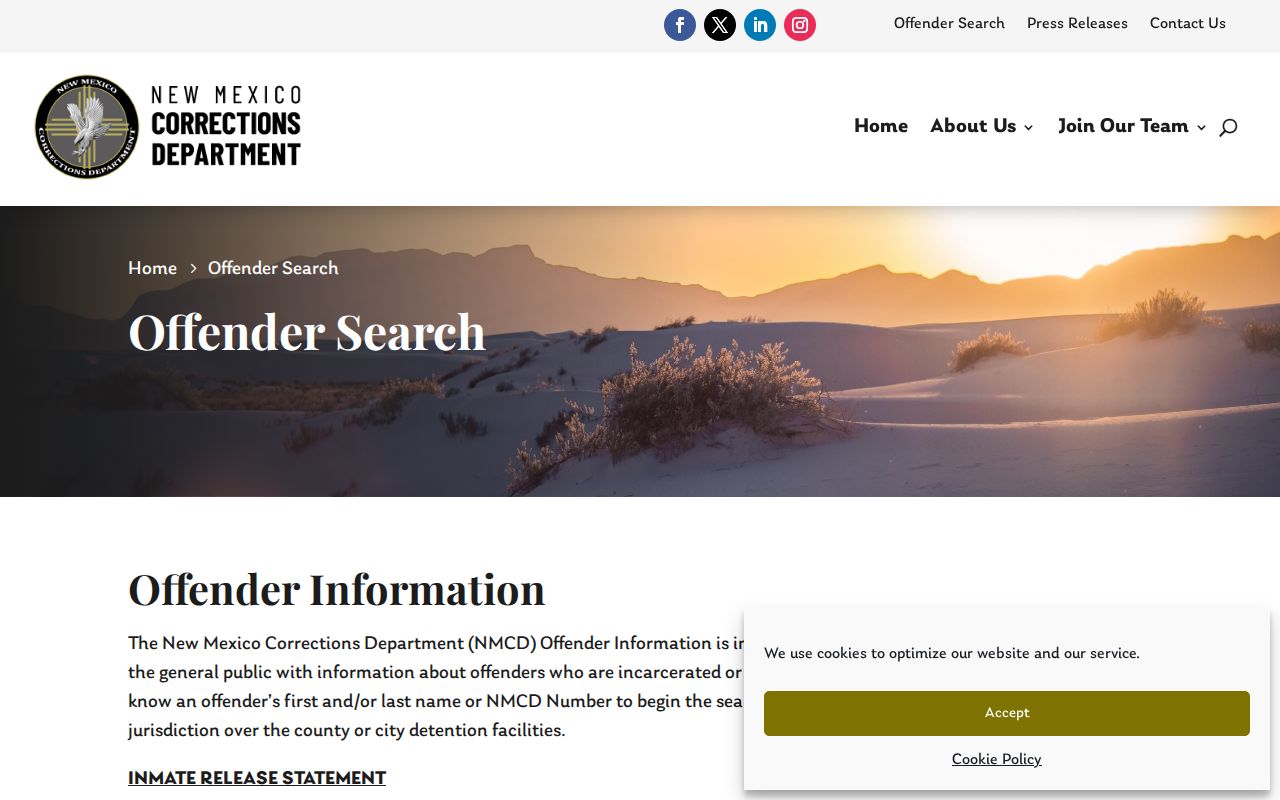
The scope statement prevents a county-only GCDC case from being mistaken for a missing state corrections record.
Note: Search by NMCD number when known, then save the exact field label and access time for comparison.
Grant County Release Calculation Records
NMCD policy form CD-141900 identifies the formal field “Projected Release Date and Calculation Method” in a Certified Case Summary. The record may also include the Parole Eligibility Date, Full Term Date of Sentence, time served, presentence confinement credit, and good, statutory, or beneficial credits. This is solid evidence that NMCD keeps those fields. It does not establish that every field always appears in a public search result.
| Record field | What it answers |
|---|---|
| Projected Release Date and Calculation Method | NMCD’s current operational projection and stated calculation basis |
| Full Term Date | The sentence endpoint distinct from the current projection |
| Parole Eligibility Date | When parole consideration may become possible, not a promised departure |
| Presentence Confinement Credit | Credit recognized for qualifying custody before the sentence |
| Good, statutory, or beneficial credits | Posted deductions that may affect the calculation |
| Release or movement event | The later agency transaction showing what actually occurred |
NMCD Offender Management Services states that it tracks people from intake through release, determines proper dates from the judgment, and posts earned or forfeited credit. That office’s record is more reliable than subtracting a flat share from a sentence. If the public portal lacks the needed fields, use NMCD NextRequest for the existing summary, movement, or calculation record.
A useful request names the person and NMCD number, identifies the sentence or case, and asks for the public portions of the Certified Case Summary, calculation method, movement history, and release or discharge record. NMCD’s IPRA notice treats its portal as the regularly monitored online route. The agency may redact protected material, but a requester can ask for the remaining public portions and the legal basis for any withholding. The normal records process should not be confused with a live-status hotline. It retrieves records that already exist, while the institution and responsible office handle current operational verification.
Grant County Earned Release Credit
New Mexico’s current earned-credit framework appears in Section 33-2-34 NMSA 1978 as amended in 2025. After presentence confinement credit is deducted, meritorious deductions are awarded on admission for the remainder of a sentence in an NMCD-designated facility, subject to the statute. The principal maximum rates are four days per month for a serious violent offense and thirty days per month for a nonviolent offense. Time after parole revocation uses deductions tied to the offense classification.
Those maximums do not guarantee an individual date. Deductions can be lost or restored under applicable rules. Approved programs, educational achievements, or defined extraordinary conduct may support lump-sum awards within statutory limits. Life sentences and life without release or parole have separate rules, and the ordinary monthly discussion does not fit them. Offense-specific provisions and another sentence may also control.
A sentence can run at the same time as another sentence, called concurrent, or one after another, called consecutive. That choice appears in the judgment and can greatly change the timeline. Presentence credit, the serious-violent designation, the date NMCD receives the person, and an amended judgment also feed the calculation. These are reasons to request the agency record rather than build a private estimate.
Does Grant County Use 85 Percent?
The common “85 percent” phrase is not New Mexico’s exact serious-violent formula. The statute allows a maximum deduction of four days per month. In a simplified thirty-day example, that leaves twenty-six days, or about 86.7 percent. Calendar months vary, and NMCD applies the law and its records to the actual sentence. The shorthand therefore cannot supply a dependable Grant County inmate release date.
The 2025 reform awards ordinary meritorious deductions up front after presentence credit on NMCD admission, subject to later loss. NMCD described the change as a way to improve clarity in projected dates. Still, an upfront posting is not immunity from a later change. Discipline, nonparticipation where the statute applies, restoration, lump-sum awards, another hold, or a corrected judgment may alter the record.
This state framework must not be applied automatically to a local GCDC sentence. No current Grant County jail good-time policy or public local projected-date formula was found. For a county sentence, request the judgment, presentence-credit order, jail calculation, and the policy version used. Ask GCDC whether any local credit applies.
Why Grant County Release Dates Change
A release projection changes when one of its inputs changes or when a separate legal authority blocks departure. Some shifts affect the calculated sentence. Others leave the sentence date intact but prevent community release. A detainer, for example, is a request or authority for another agency to hold or receive the person. Transfer on that detainer is not release into the community.
| Factor | Possible effect | Record to check |
|---|---|---|
| Earned-credit loss or restoration | Moves the current projection later or earlier | NMCD calculation and credit history |
| Presentence credit correction | Changes time credited before NMCD admission | Court order and Certified Case Summary |
| Concurrent or consecutive sentence | Changes how multiple terms combine | Judgment and sentence |
| Warrant, detainer, or other case | May prevent community release or cause transfer | Court docket and agency movement record |
| Parole decision or plan | Eligibility may not become release without a grant and approved plan | Adult Parole Board action |
| Amended judgment | Replaces an input in the calculation | Filed court order and updated NMCD summary |
A parole eligibility date is especially easy to misread. Eligibility permits consideration. The Board may grant or deny parole, and an approved plan plus conditions may be required. A hearing date is not an actual release date. After a denial, later consideration may follow under the applicable law, but it should not be presented as a fixed departure.
Grant County Court Release Dates
Grant County cases can move between court layers. Magistrate Court handles felony preliminary proceedings and specified lower-level matters. District Court handles the felony case and final judgment. Municipal Court handles matters within its own authority. Search all case numbers tied to the booking because a bond entry in one case may coexist with a hold in another.
A conditions-of-release order states judicial terms, but not the exact time GCDC completed processing. A bond-posted entry shows that a financial condition was met, yet another warrant can still prevent departure. A judgment supplies the sentence and credit authority. The jail’s movement record then shows whether staff released the person, transferred the person, or continued custody under another authority.
The New Mexico Case Lookup supports name and case searches across public court records.
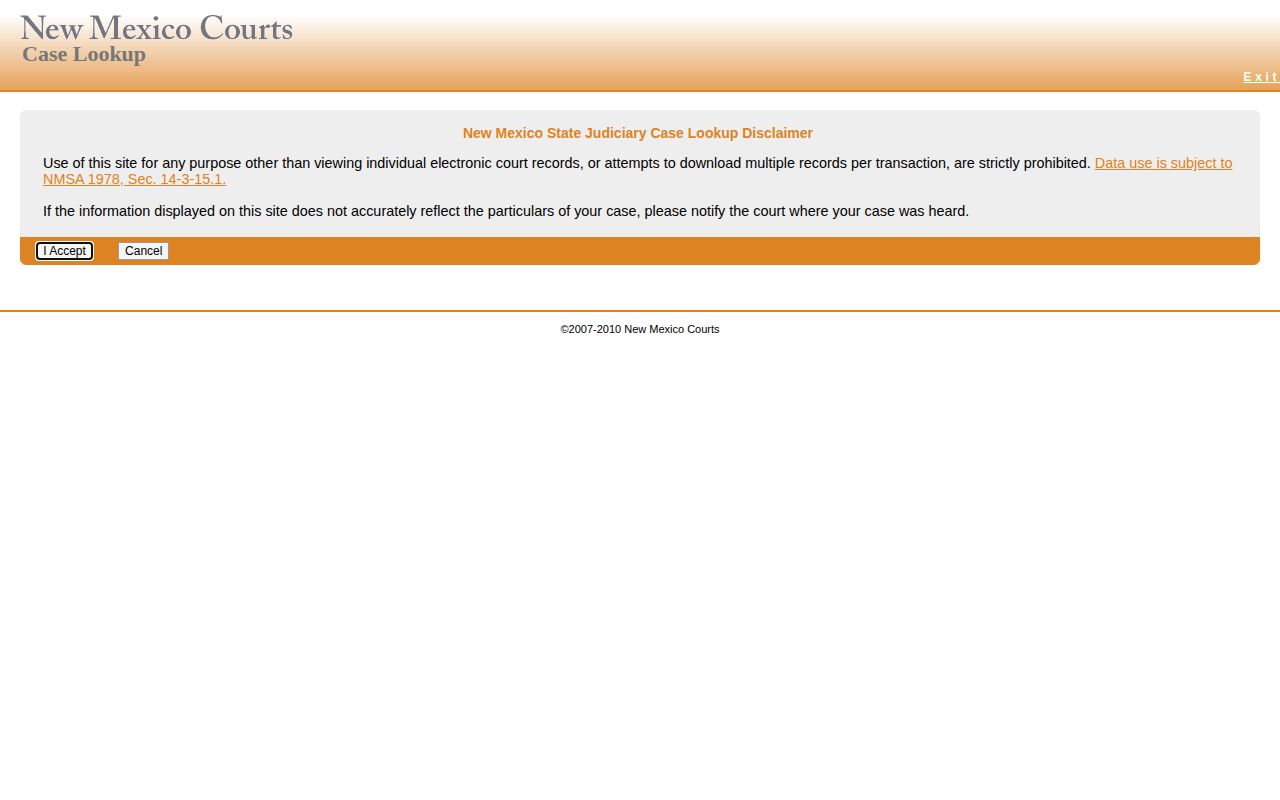
The docket can explain the legal order, while the jail or NMCD transaction remains the source for the physical release event.
Note: An order signed on one date may require processing and hold checks before the person physically leaves custody.
Confirm Grant County Actual Release
A pending alert can help with timing, but it is not a certified date. When the relevant agency participates, the Grant County VINELink release check can register a custody-change notice. VINE may lag, omit a transfer explanation, or be affected by a service notice. Confirm the event with the agency that held the person.
For GCDC, request the booking/release report with the release date, time, disposition, and receiving agency when public. For NMCD, request the release or discharge event and movement history. If formal proof is required, ask whether a certified copy is available. A final release to parole still leaves community supervision to verify, while a transfer to another agency means custody continues.